Construction Equipment Financing 2026: A Contractor’s Guide to Capital
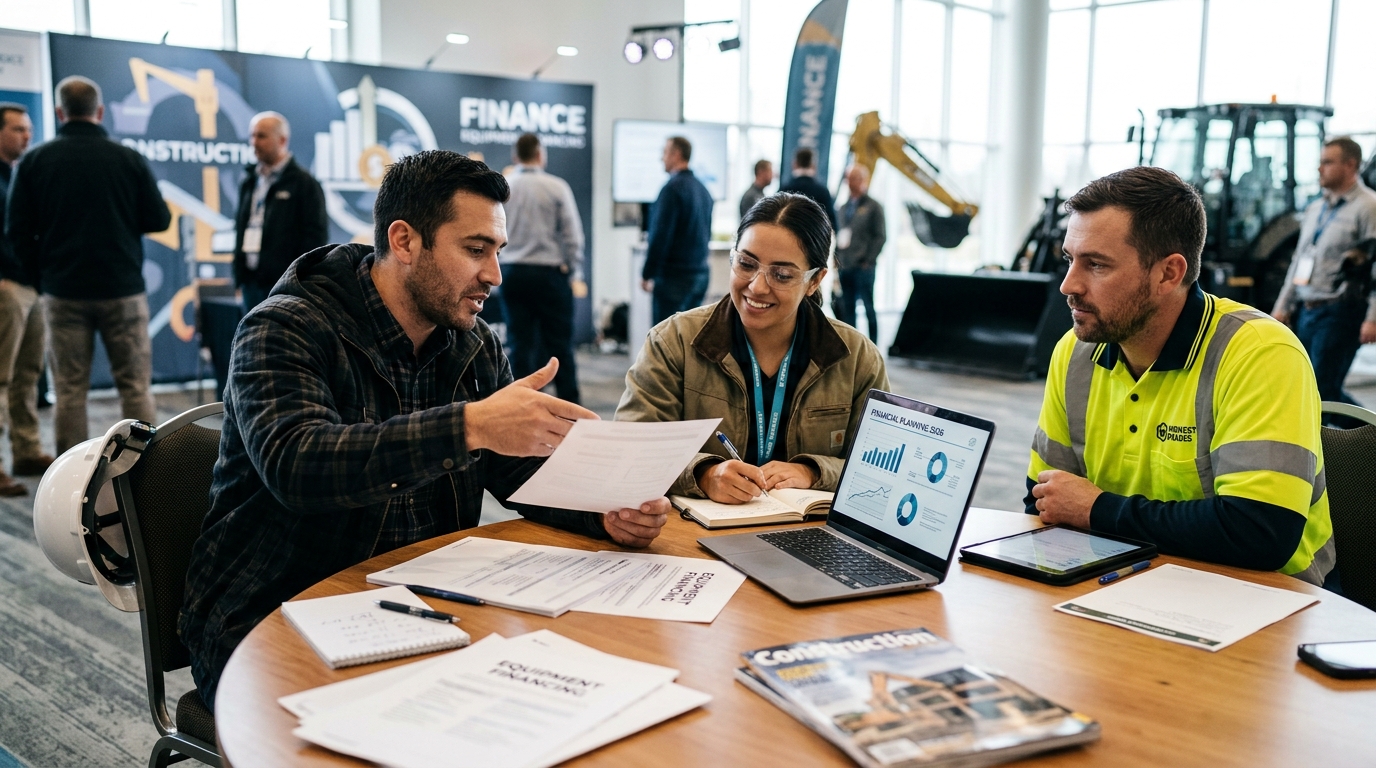
How can I get construction equipment financing 2026 for my firm today?
You can secure construction equipment financing 2026 by providing three months of business bank statements and an equipment invoice to a lender specializing in industrial assets. [Check your rates and see if you qualify for funding now.]
When your project timeline is compressed, you cannot afford to wait weeks for a traditional bank to review a loan application. The current market for construction equipment financing 2026 prioritizes speed and collateralized risk. Because the asset you are purchasing—whether it is a skid steer, excavator, or specialized fleet vehicle—serves as collateral, lenders are willing to bypass some of the rigid requirements found in traditional commercial lending.
If you have a vendor quote ready, you are halfway there. Most modern lenders operate on an automated underwriting platform. They analyze your cash flow deposits, not just your personal credit score. This means that if your firm generates consistent revenue, you can often secure funding despite past credit blips. Many contractors find that no down payment equipment financing is an option when the lender sees a strong history of project completion and sufficient cash flow to cover the monthly payment. By focusing on asset-based lending, you avoid the lengthy paperwork associated with SBA loans for general contractors, allowing you to get the iron on the job site without halting your progress.
How to qualify
Qualifying for construction financing involves meeting several concrete thresholds that lenders look for in 2026. While each lender has unique guidelines, the following criteria are industry standards for small to mid-sized contractors.
Time in business: Most reputable lenders require a minimum of six months of active operation. If you are a newer entity, lenders will often require a personal guarantee or a larger down payment. For established firms with two-plus years in business, qualifying is significantly faster.
Credit score thresholds: For prime interest rates, a credit score of 680 or higher is ideal. However, there are many contractor business loans for bad credit accessible today. If your score is between 550 and 650, you can still qualify, though you should expect slightly higher rates. Lenders will look at your "debt-to-income" ratio to see if your current project load can handle the new payment.
Revenue verification: Lenders typically require proof of at least $10,000 to $15,000 in monthly deposits. Have your last three to six months of business bank statements ready. This is the single most important document for quick underwriting.
Documentation: Prepare your business tax returns for the most recent year, a current year-to-date profit and loss statement, and a formal equipment quote from a dealer. Do not rely on casual price estimates; a dealer invoice proves the asset value.
Asset verification: The equipment must be from a verifiable dealer. Buying from a private party is significantly harder to finance because the lender cannot easily verify the value or clear the title. Always stick to professional heavy machinery dealers to ensure a smooth funding process.
Comparing Your Financing Options: Leasing vs. Buying
| Feature | Equipment Leasing | Term Loan (Buying) |
|---|---|---|
| Ownership | Ends at lease term | Owned from day one |
| Monthly Cost | Lower (operating expense) | Higher (principal + interest) |
| Tax Benefit | Full payment is deductible | Depreciation + interest deduction |
| Best For | Short-term needs / New tech | Long-term fleet investment |
How to decide between these two paths
Choosing between leasing and buying depends on your current cash situation and tax strategy. If your primary goal is to minimize monthly out-of-pocket costs to keep your payroll gaps managed, leasing is the logical choice. It acts as an operating expense, which keeps your balance sheet leaner and allows you to upgrade to newer, more efficient machines every 36 to 48 months. This is particularly helpful for specialized trade contractors who need the latest hydraulic or digital tech on their machines to remain competitive.
On the other hand, if you know the asset will be a staple of your fleet for the next decade, buying is the superior financial move. While the monthly payments are higher because you are paying off the full purchase price, you stop making payments once the loan is settled. At that point, you own a valuable asset that adds to your company’s net worth. If you are struggling with cash flow, do not choose the path that makes you "feel" like you own the equipment; choose the path that keeps your monthly overhead low enough that you don't miss a payroll cycle.
What are the typical heavy machinery financing rates 2026?
Heavy machinery financing rates 2026 currently range from 6% to 22%. Your specific rate depends entirely on your credit score, time in business, and the age of the equipment. A newer machine with a warranty usually qualifies for the lower end of that bracket, while older, used equipment will often trigger a higher interest rate due to the increased risk of mechanical failure.
Is invoice factoring for construction a viable way to get working capital?
Yes, if you have long payment terms with general contractors or property owners, invoice factoring is a standard way to unlock cash. It allows you to sell your outstanding accounts receivable to a lender at a discount to get immediate cash. If you are looking at factoring services to bridge the gap between completed work and client payment, ensure you understand the "recourse" terms, which define who takes the loss if your customer fails to pay their bill.
What are my options for fleet vehicle financing for contractors?
Fleet vehicle financing for contractors is highly specialized. While some general business loans apply, you should look specifically for alternative lending options for work trucks to get better terms. These lenders understand that a work truck is not a consumer vehicle; they account for upfitting costs, branding, and long-term depreciation specific to construction industry use cases.
Background & Mechanics: How Construction Funding Works
At its core, construction equipment financing is a secured loan. Unlike a general working capital loan, which is often based on your business's overall revenue performance, equipment financing is tied directly to the asset you are purchasing. This collateral makes the loan inherently less risky for the lender. Because the lender can repossess the skid steer, excavator, or crane if you stop making payments, they can offer you lower interest rates and more flexible terms than they would for an unsecured line of credit.
According to the U.S. Small Business Administration (SBA), small construction firms that secure their equipment needs early in their growth cycle are statistically more likely to weather economic downturns than those that rent or rely on cash-heavy purchases. This is because financing allows you to keep your liquid cash reserves (your working capital) available for unexpected payroll gaps, material price hikes, or sudden job site requirements.
When you initiate the process, the lender conducts an appraisal. They look at the equipment's value in relation to the loan amount—the "Loan-to-Value" (LTV) ratio. As of 2026, most lenders prefer an LTV of 80% to 100%. This is why having a clean invoice from a dealer is critical; the lender isn't just looking at you, they are looking at the machine. According to data from FRED (Federal Reserve Economic Data), interest rates for commercial loans have stabilized in recent quarters, but specialized equipment financing rates remain competitive because they are backed by tangible, resellable assets.
How to get a contractor business loan if you are a startup? You focus on your "contractor startup loans" options. These are often structured differently than standard business loans because they rely more heavily on personal credit and the strength of the equipment itself. If you are in the startup phase, you must prove that you have the contracts in place to support the equipment. Showing a signed contract for a project that requires the specific machine you want to buy is the fastest way to get an approval.
Bottom line
Construction equipment financing 2026 is accessible for those who prepare their financial documents and understand that the equipment itself is their strongest bargaining chip. Stop waiting on traditional banks and start looking for specialized lenders who understand the unique rhythm of the construction industry. Use your assets to secure the capital you need today.
Disclosures
This content is for educational purposes only and is not financial advice. thecontractors.news may receive compensation from partner lenders, which may influence which products are featured. Rates, terms, and availability vary by lender and applicant qualifications.
Ready to check your rate?
Pre-qualifying takes 2 minutes and won't affect your credit score.
See if you qualify →Frequently asked questions
What is the fastest way to get equipment financing?
Online lenders specializing in construction equipment offer the fastest path, often funding within 24-48 hours by using the equipment itself as collateral.
Can I get a loan with bad credit?
Yes, many lenders offer contractor business loans for bad credit by focusing on the equipment's value and your recent cash flow rather than just your FICO score.
Is leasing better than buying in 2026?
Leasing is often better for cash flow preservation and tax efficiency, while buying offers long-term equity if you plan to keep the machine for years.