Fleet Vehicle Financing: A Contractor’s Guide to Scaling Your Assets in 2026
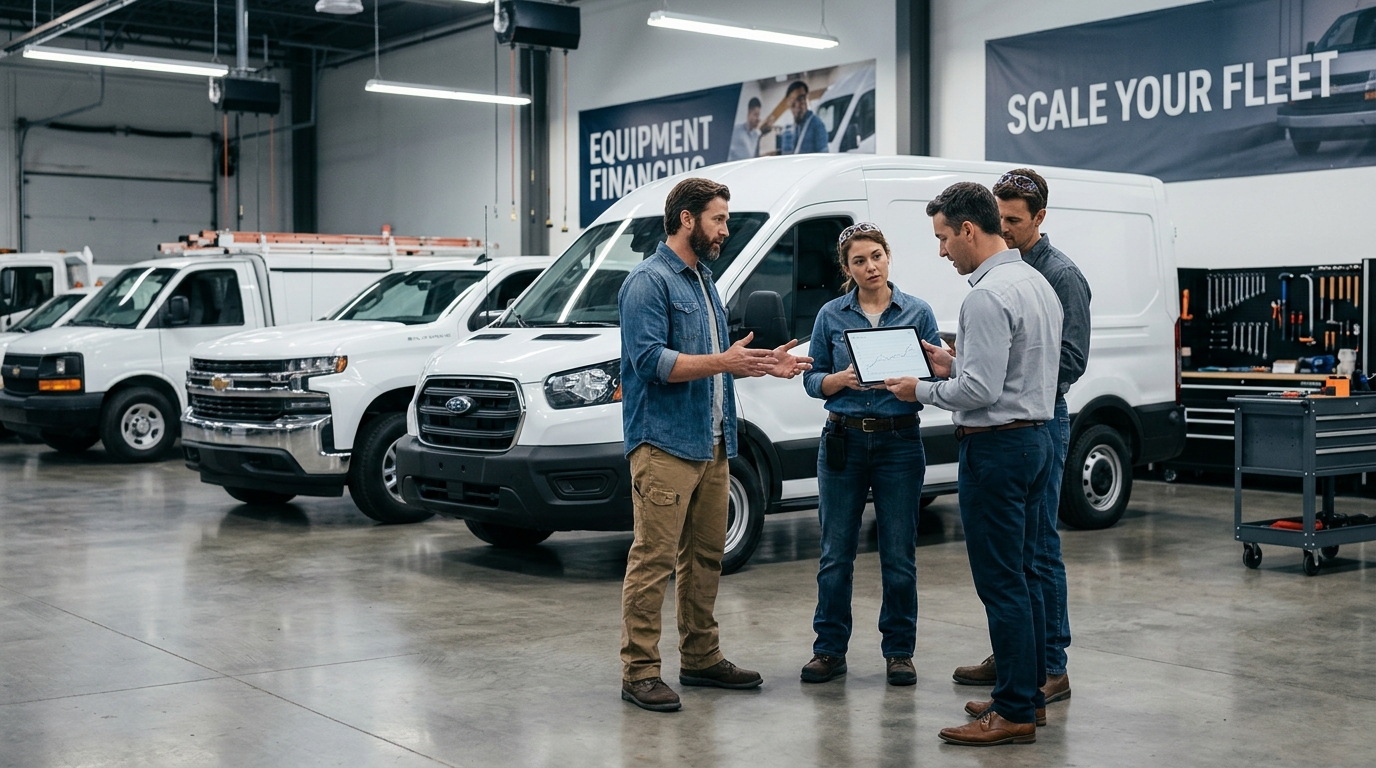
How can I secure fleet vehicle financing for my construction business today?
You can secure fleet vehicle financing in 2026 by applying directly through specialized heavy machinery lenders, ensuring your business has at least 6 months of operating history and verified revenue.
[Check your financing options now]
Fleet vehicle financing isn’t just about buying a truck; it is about getting that asset on the road without draining your working capital. When you are looking to scale, you need a strategy that moves faster than a traditional bank loan. In 2026, the marketplace for contractors has shifted toward automated underwriting, meaning you can often get an approval decision within 24 to 48 hours if you have your documentation ready.
The most efficient route for a small construction firm is typically a dedicated equipment loan or a lease-to-own agreement. Unlike an SBA loan, which can take months to process, specialized fleet financing looks at the vehicle as collateral. This significantly lowers the risk for the lender, which works in your favor. If you are trying to upgrade a single van or build out a full fleet of work trucks, the mechanics of approval rely heavily on two factors: the age of the vehicle and your ability to prove the business can support the monthly payment. For specific advice on securing machinery loans when your credit profile isn't perfect, understanding the nuance of securing machinery loans with average credit is a critical step in maintaining your cash flow during the acquisition process.
How to qualify
Qualifying for fleet financing requires a clear picture of your business's health. Lenders in 2026 are looking for specific, quantifiable data points to mitigate their risk. You should prepare the following before you submit an application.
- Credit Score Thresholds: While “no credit check” loans are essentially a myth, you can find lenders who accept scores as low as 550 to 600. However, expect interest rates to be higher. If your score is above 680, you will qualify for prime rates, which are significantly more manageable for long-term fleet growth.
- Time in Business: Most lenders want to see at least 6 months of operation. If you are a startup, you will likely need to provide personal financial guarantees and perhaps a larger down payment (often 20% or more) to offset the lack of business credit history.
- Revenue Documentation: Lenders will ask for three to six months of business bank statements. They want to see consistent deposits. A monthly revenue of $10,000 is often the floor for competitive financing, though this varies by loan size.
- The Vehicle Quote: You must have a formal purchase order or quote from the dealer. Lenders need to know exactly what they are financing. If the vehicle is used, ensure it has a clean title and, if possible, a service history report, as these details can speed up the approval process.
- Proof of Insurance: You cannot drive a fleet vehicle off the lot without commercial coverage. Have your policy information ready to present, as lenders will not fund a deal without proof that the asset is insured.
- Application Steps: Start by getting pre-qualified without a hard credit pull. Once you have a soft offer, gather your last two years of tax returns, your most recent bank statements, and the vehicle quote. Submit these as a single, organized packet to speed up the underwriter’s review.
Choosing the right financing path
When you are staring down the need for a new fleet, the method of acquisition matters as much as the vehicle itself. You are essentially choosing between retaining cash and owning the asset immediately versus preserving your credit line and paying for usage.
Comparing Fleet Acquisition Methods
| Option | Best For | Typical Term | Ownership |
|---|---|---|---|
| Equipment Loan | Long-term ownership | 3-6 Years | You own it at the end |
| Capital Lease | Tax advantages | 2-5 Years | Purchase option at end |
| Operating Lease | Frequent vehicle turnover | 2-4 Years | Return vehicle at end |
| Line of Credit | Mixed usage/payroll/fleet | Revolving | Depends on use |
If your goal is to hold onto the trucks for 10 years, an equipment loan is your standard play. You pay interest, you own the asset, and you can depreciate it. If you are a high-growth firm that needs to cycle vehicles every 36 months to avoid maintenance headaches, an operating lease makes more sense. You are essentially renting the utility of the vehicle. Do not just look at the monthly payment; look at the total cost of ownership. If the operating lease payment looks cheaper, verify what the "balloon" or residual value payment looks like if you decide to keep the truck. In many cases, contractors opt for equipment loans because they want to build equity in the business, but if your cash flow is tight and you need to keep payroll funded, a lease that frees up cash today might be the smarter operational move.
Essential Contractor Financing Q&A
Can I finance a fleet of vehicles with bad credit? Yes, bad credit is not an automatic disqualifier for fleet financing, but it will change the structure of the deal. Lenders who work with contractors in the 550–620 credit range typically mitigate their risk by requiring a 15% to 25% down payment and shorter repayment terms, usually between 24 and 36 months. You are effectively buying the lender’s confidence with the down payment, and as you prove you can make payments on the first one or two vehicles, your ability to secure box truck loan requirements for owner-operators and other assets will improve significantly as you build a track record of on-time payments.
Is it better to use a general business loan or a specific fleet loan? It is almost always better to use a specific fleet or equipment loan rather than a general business loan. Equipment-specific financing is secured by the vehicle itself, which makes the underwriting process faster and usually results in lower interest rates. A general working capital loan or a line of credit is unsecured, meaning the lender is taking more risk, which they compensate for by charging higher rates. Reserve your construction line of credit for payroll gaps or emergency repairs, not for capital assets like vehicles.
Are there options for no down payment equipment financing in 2026? Yes, zero down payment options exist, but they are generally reserved for established businesses with strong credit profiles and healthy cash flow. If you have been in business for more than three years and have a credit score above 700, lenders may be willing to finance 100% of the vehicle cost. For newer contractors or those with average credit, a zero-down offer often comes with significantly higher interest rates, so calculate if paying the down payment now will actually save you money on interest over the life of the loan.
Background: The mechanics of fleet financing
Fleet vehicle financing is a specialized financial instrument designed to help trade contractors acquire the machinery necessary to scale operations without depleting the cash reserves needed for day-to-day survival. At its core, it is a contract where the lender provides the funds for the purchase of vehicles—whether pickup trucks, vans, or dump trucks—and retains a security interest in those assets until the loan is satisfied. This structure is what makes the process accessible, even to those without perfect credit. Because the vehicle itself serves as collateral, the lender has a clear path to recovery if the contractor defaults, which reduces the barriers to entry compared to an unsecured small business loan.
Understanding the broader economic context of the construction industry is vital here. Construction is notoriously capital-intensive, with long payment cycles from general contractors or project owners often straining small subcontractors. According to the Small Business Administration (SBA), business owners who effectively utilize equipment-specific financing can maintain higher liquidity during lean periods, which is crucial for operational stability. By spreading the cost of an asset over its useful life—rather than paying for it entirely out of pocket—contractors can better align their debt service with the income generated by the equipment.
Furthermore, market trends in 2026 show a significant increase in the use of specialized financing to combat inflationary pressures on vehicle prices. According to data from FRED (Federal Reserve Economic Data), the producer price index for commercial motor vehicles has seen sustained volatility over the past few years, making it harder for cash-strapped contractors to buy outright. Financing allows you to lock in a purchase price today while paying off the liability with future revenue. This mechanism essentially serves as a hedge against future price increases. Whether you are looking at equipment financing for heavy machinery or light-duty fleet vehicles, the process remains the same: you identify the asset, the lender verifies the collateral, and the contract is structured to match the depreciation of the vehicle. By viewing fleet vehicles as income-generating assets rather than overhead costs, you shift your mindset from merely surviving to actively scaling your operations.
Bottom line
Fleet vehicle financing in 2026 is a practical tool for growth, provided you match the loan structure to your specific cash flow needs. Don't let a lack of immediate cash stop your scaling—review your qualification status today and find the right lender to keep your fleet moving.
Disclosures
This content is for educational purposes only and is not financial advice. thecontractors.news may receive compensation from partner lenders, which may influence which products are featured. Rates, terms, and availability vary by lender and applicant qualifications.
Ready to check your rate?
Pre-qualifying takes 2 minutes and won't affect your credit score.
See if you qualify →Frequently asked questions
What credit score do I need for fleet vehicle financing?
Most traditional lenders require a 650+ score, but specialized construction lenders offer options for scores as low as 550 to 600, often with higher down payments.
Can I finance a fleet with bad credit?
Yes. Contractors with bad credit often use equipment leasing or heavy machinery financing, which relies more on the asset's value than personal credit history.
How much down payment is required for fleet vehicles?
Down payments typically range from 0% to 20%. New businesses or those with lower credit scores usually face the higher end of that range.