2026 Heavy Machinery Financing Rates: What Contractors Need to Know
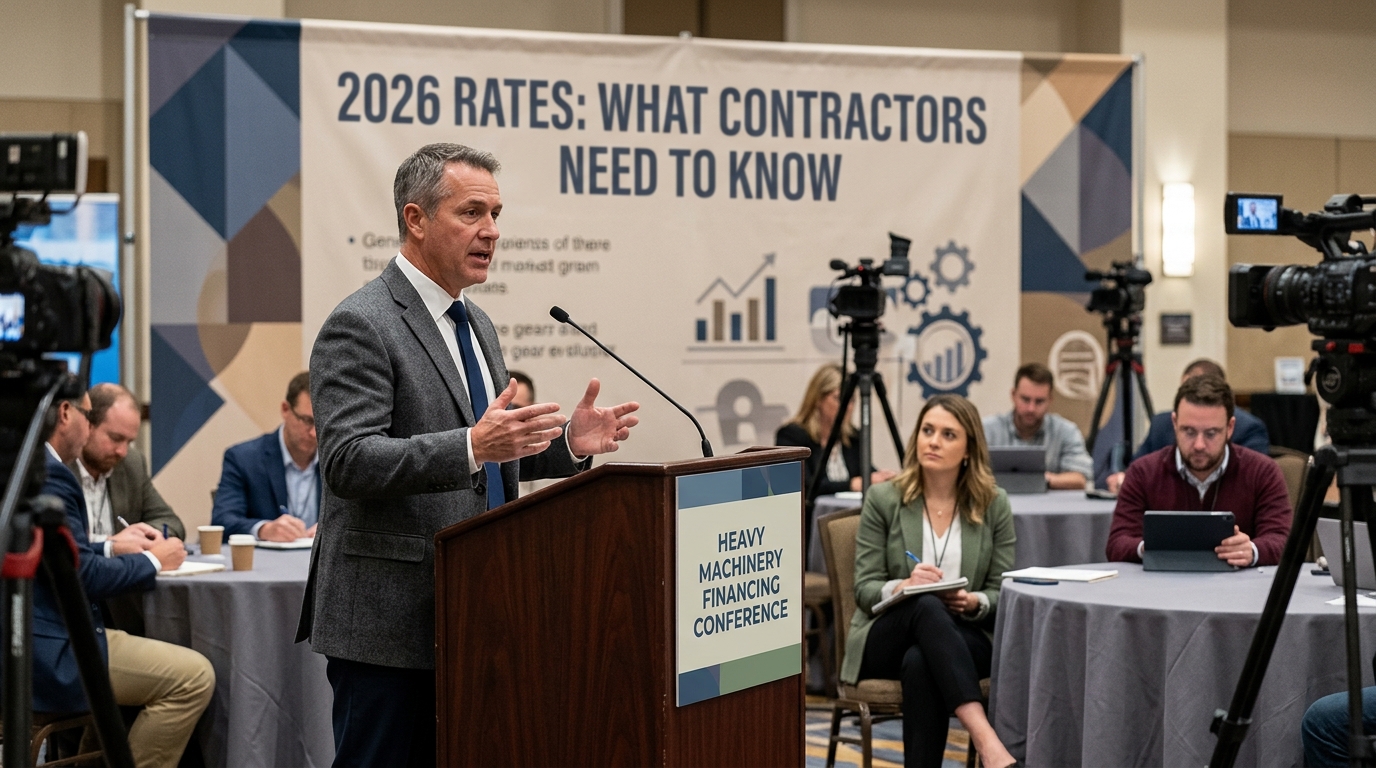
What are current 2026 heavy machinery financing rates?
In 2026, most contractors with strong credit can expect heavy machinery financing rates between 7% and 12%, though specialized leasing agreements for older equipment can climb toward 18% or higher.
[Button: Check my personalized rates now]
The reality of the market right now is that rates are heavily influenced by the equipment's age, your time in business, and the specific lender type. If you are walking into a traditional bank, you might see lower advertised rates, but the approval timeline is often too slow for a project that needs a backhoe by next week.
Independent trade contractors typically find that specialized equipment financing companies offer more flexibility than major retail banks. These lenders focus on the asset value rather than just your personal credit score. For example, if you are buying a used 2024 skid steer versus a brand-new excavator, the interest rate will differ significantly because the loan-to-value (LTV) ratio changes. A prime-credit contractor (680+ score) buying newer, high-demand machinery can often lock in a fixed rate near the 7-9% range. Conversely, if you are seeking equipment financing for small construction firms with spotty credit, you are looking at “equipment-backed” loans where the interest might settle between 14% and 22%. These loans are faster to close, helping you get the machinery on-site to start billing hours immediately.
How to qualify
Qualifying for construction equipment financing 2026 is less about your personal character and more about your ability to prove the machine will generate revenue. Here is the standard breakdown of how to qualify for financing:
- Credit Score Thresholds: Most traditional lenders want to see a FICO score of 650 or higher. If your score is between 550 and 640, you are looking at high-risk lenders who prioritize your recent cash flow over your credit history. They will charge more, but they will approve you.
- Time in Business: Lenders generally prefer to see two years of active business history. Startups face a steeper climb; if you have been in business less than six months, expect to provide a substantial down payment—sometimes up to 25%—to mitigate the lender’s risk.
- Revenue Documentation: Prepare your last three months of bank statements and your most recent Profit & Loss (P&L) statement. Lenders want to verify that your monthly gross revenue can comfortably cover the new equipment payment without putting your payroll at risk.
- Equipment Specifications: Have the “spec sheet” or invoice from the seller ready. Lenders need to know the make, model, year, and serial number of the machine. They are essentially underwriting the resale value of the iron as much as they are underwriting your business.
- Application Steps: First, get your equipment quote. Second, gather your bank statements for the last 90 days. Third, submit your application through a lender specializing in construction gear. If you are just starting out, you can explore specialized routes by reading the 2026 Equipment & Vehicle Financing Guide to understand how these paths differ for startups versus established firms.
Choosing the right financial vehicle
When you need to get equipment on the job site, you generally have two main paths: an Equipment Loan (you own it at the end) or an Equipment Lease (you rent it with an option to buy).
Equipment Loan
- Pros: You own the asset once paid off; you can take a tax deduction on the interest and depreciation.
- Cons: Higher monthly payments; requires a bigger upfront commitment; often demands a harder look at your personal financial records.
Equipment Lease
- Pros: Lower monthly cash outlay; easiest path to get approved; allows for upgrading to newer tech every few years.
- Cons: You may not own the machine at the end unless you pay a “buyout” fee; total cost of ownership is usually higher than a loan.
If you have high immediate cash flow needs, a lease keeps your working capital liquid for payroll and materials. If you plan to keep the machine for a decade, an equipment loan makes more financial sense, even if the monthly payment stings a little more. When reviewing offers, don't just look at the interest rate; look at the “all-in” cost of the lease versus the loan over 36 or 48 months. Sometimes a slightly higher rate on a loan is cheaper than a low-rate lease with a massive balloon payment at the end.
What are the best fast contractor funding options?: If you need money in less than 48 hours for immediate needs, look into a construction line of credit or invoice factoring, where lenders advance you cash based on your outstanding project invoices rather than waiting for your customer to pay.
Is it possible to get no down payment equipment financing?: Yes, but typically only if you have a credit score above 700 and at least three years of solid business financial records, as lenders need to offset the risk of not having skin in the game.
How does invoice factoring for construction work?: Instead of taking a loan, you sell your unpaid invoices to a factor who gives you a cash advance of 80-90% immediately; once your client pays the full invoice, the factor releases the remaining balance minus a small processing fee.
Background & How It Works
Heavy machinery financing is essentially a secured loan. The machine itself acts as collateral. Because the lender has a direct claim on the excavator, bulldozer, or crane, they are more willing to lend to independent contractors who might not qualify for unsecured personal or business loans. This is why you can often find decent rates even when other types of credit are tight.
In the broader construction market, financing allows firms to keep their cash reserves for volatile costs like fuel, labor, and materials. According to the Small Business Administration, small businesses make up 99.9% of all U.S. firms, and access to capital for equipment is a critical barrier to scaling for these entities as of 2026. Because construction is capital intensive, relying on cash-only purchases often kills growth. You cannot bid on bigger, more profitable contracts if your fleet is rusting or obsolete.
Furthermore, the structure of your deal matters for tax strategy. Equipment financing is often structured as a Section 179 expense, which can allow you to write off the full purchase price of qualifying equipment in the year you buy it. According to the Federal Reserve Economic Data (FRED), business equipment investment has remained a primary driver of industrial productivity as of 2026, signaling that lenders are generally active and looking for reliable contractors to fund. If you are struggling with your current credit tier, you can gain clarity by reviewing the Owner Operator Equipment Financing by Credit Tier, which breaks down exactly which loan products are realistic for different financial profiles. Whether you are seeking SBA loans for general contractors or private equipment leasing, the mechanics rely on the lender’s confidence that your machine will be working hard enough to pay for its own debt service.
Bottom line
Don't let rigid financing requirements stall your next project or limit your ability to scale your fleet in 2026. Compare your equipment loan and leasing options today to see which structure maximizes your cash flow and tax benefits.
Disclosures
This content is for educational purposes only and is not financial advice. thecontractors.news may receive compensation from partner lenders, which may influence which products are featured. Rates, terms, and availability vary by lender and applicant qualifications.
Ready to check your rate?
Pre-qualifying takes 2 minutes and won't affect your credit score.
See if you qualify →Frequently asked questions
What are current heavy machinery financing rates for 2026?
Rates generally range from 6% to 15% for A-tier credit, but can exceed 25% for high-risk equipment leasing options.
Can I get equipment financing with bad credit?
Yes, many lenders offer contractor business loans for bad credit, though you should expect higher down payments and shorter repayment terms.
Is a down payment required for construction equipment loans?
While traditional bank loans often require 10-20% down, some specialized equipment lenders offer no down payment options for qualified buyers.
How long does it take to get funded for machinery?
Fast contractor funding options can get capital in your account within 24 to 48 hours for smaller equipment, while heavy machinery underwriting may take 3-5 days.